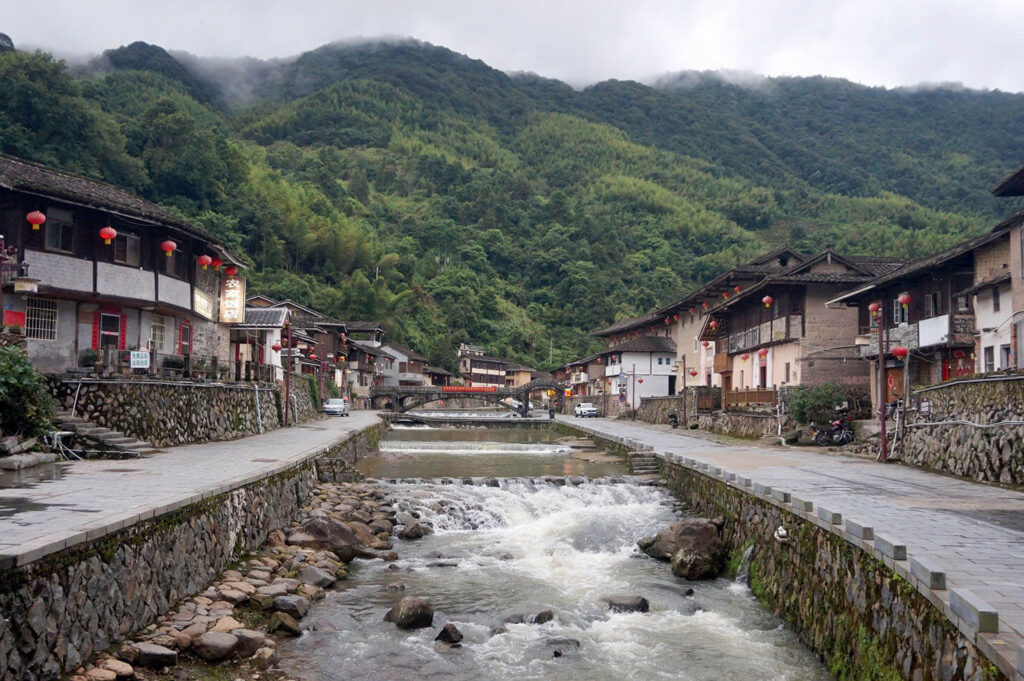
As you probably know, China is home to incredible natural sites and ultra-modern megacities. However, it also boasts outstanding historical cities and towns that showcase the country’s rich history and culture.
We’ve visited almost a dozen beautiful ancient cities and towns in China. Some are close to major cities and are easy to reach, while others are more remote, nestled in breathtaking natural surroundings. All of them are well worth a visit.
If you get the chance to visit any of these places, try to stay overnight. Most are very touristy, and since the majority of visitors leave in the afternoon, you’ll have these magical places mostly to yourself!

Pingyao
Pingyao is the best-preserved ancient city in China. Founded in the 14th century, it was an important trading hub during the Ming and Qing dynasties. By the late 19th century, it had become one of the country’s main financial centers. The first draft bank in China was established here.
The Old City of Pingyao is a maze of parallel and perpendicular streets surrounded by a giant city wall. Hundreds of historical buildings have been preserved, including homes, temples, and banks. The old city is fully pedestrianized, making it perfect for walking or biking.
Pingyao is conveniently located on the train route between Beijing and Xi’an, two of China’s most visited cities. It’s around 2.5 hours from Xi’an and just over 3 hours from Beijing by high-speed train. The high-speed train station is called Pingyao Gucheng. You can also fly into the nearby Taiyuan Wusu International Airport.
There are plenty of nice hotels in Pingyao. We stayed at the Elsewhere Hotel Inn Ancient City Center, a magnificent historic house right in the heart of the old city. The service was superb.

Fenghuang
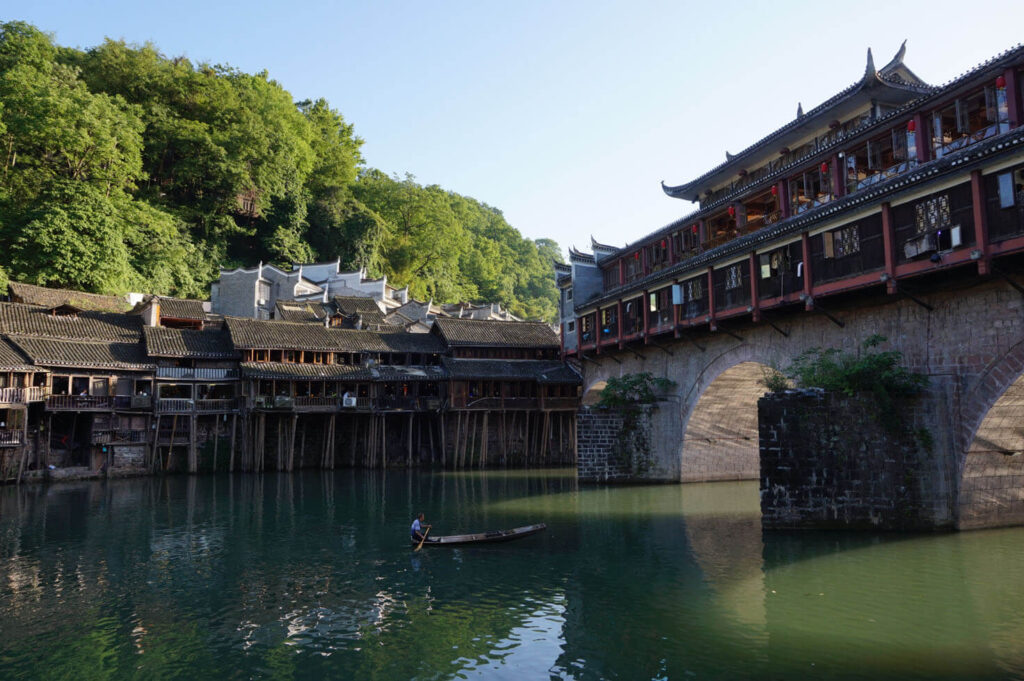
Nothing can prepare you for Fenghuang. This extraordinary ancient city is located in central Hunan, one of our favorite Chinese provinces. It was built in the 14th century by the Ming dynasty as a military post to defend against the Miao and Tujia peoples. Today, many ethnic groups live here in perfect harmony.
Life in Fenghuang revolves around the beautiful Tuo River. From the Rainbow Bridge to the fantastic stepping-stone bridge, everyone gathers here to enjoy the scenery. Numerous impressive wooden stilt houses still line the riverbanks. You’ll also find historic mansions and parts of the ancient city wall.
Since the introduction of high-speed rail, visiting Fenghuang has become much easier. It now takes only one hour from Zhangjiajie, the famous natural site, and around 2 hours from the provincial capital, Changsha. The high-speed train station is called Fenghuang Gucheng. The closest airport is Tongren Fenghuang Airport.
Fenghuang also offers wonderful hotels. We recommend choosing one with nice views. We stayed at Wang Jiang Reclusive Boutique Inn, located on a hillside within walking distance of the main attractions.
Lijiang
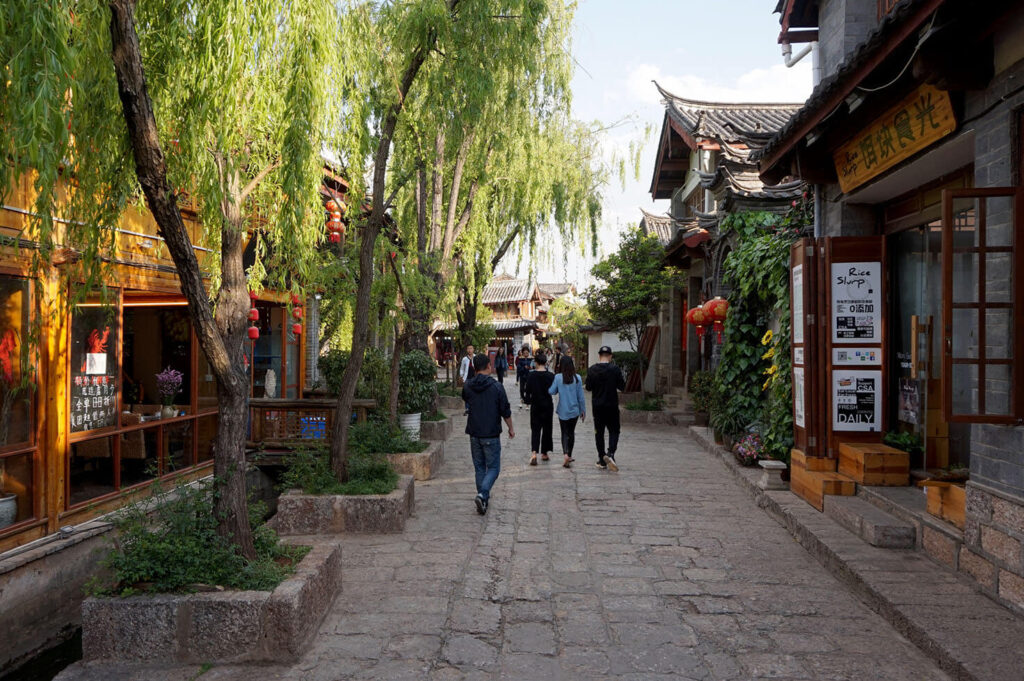
Lijiang is probably the most beautiful ancient city in China. Located at the foot of the imposing Jade Dragon Mountain, it perfectly combines nature and architecture. The Southern Song Dynasty founded Lijiang in the late 13th century. For centuries, it was a major trading post for tea and other goods.
Lijiang’s Old Town is large and impressive. Curved, narrow pedestrian streets wind between charming houses and canals. There’s a palace on a hill, a gorgeous lake with scenic views, stunning natural surroundings, and ancient villages nearby. If you can visit only one city on this list, it should be Lijiang!
The easiest way to reach Lijiang is by flying into Lijiang Sanyi Airport. If you prefer trains, there are high-speed connections with Dali (1.5 hours) and Kunming (2.5 hours). Lijiang Train Station is close to the old town.
In Lijiang, many historical courtyard houses have been converted into hotels. We stayed at the lovely Lijiang Gemmer Hotel. The rooms have wooden floors, spacious bathrooms, and comfortable beds. The service was exceptional.
Chengkan Town
Chengkan Town, also known as Chengkan Ancient Village, is our favorite place on this list. It’s one of many ancient towns near Huangshan Mountain in Anhui Province. The town’s history dates back over 2,000 years and it is one of the few places fully designed according to Feng Shui principles.
Unlike the nearby UNESCO-listed sites (Xidi and Hongcun), Chengkan is rarely visited by tourists. However, it’s so picturesque that many photographers come here for photo-shoots. It features charming cobbled streets, ancient houses, an impressive temple, and walkways over scenic ponds.
Getting to Chengkan Town is not easy. First, you need to take a high-speed train to Huangshan – Tunxi, which takes 2.5 to 3 hours from Shanghai and about an hour less from Hangzhou. The train station is called Huangshan North. From there, you’ll need to hire a driver or rent a car. The nearest airport is Huangshan Tunxi International Airport.
There are very few hotels in Chengkan Town, and you’ll need to book them via Chinese platforms like Trip.com. The best hotel in town is SU House, an ancient residence right in front of the pond. We stayed in nearby Tangkou Town at the Cheng Jin Hotel, the perfect base for exploring Huangshan and the ancient towns of Anhui.

Xingping Ancient Town
Xingping is famous across China for its stunning natural setting – it’s the landscape depicted on the 20 CNY bill! The iconic Li River flows right past the town. Xingping was founded in 265 AD and still has buildings from the Ming and Qing periods.
Although the ancient town itself is quite charming, there’s not a lot to see. The main attractions are a few old streets and the surrounding scenery. Boat tours to the famous karst landscapes depart from just off the main street. There are also a few hiking and cycling routes in the area.
Reaching Xingping is fairly easy. High-speed trains between Guangzhou and Guilin stop nearby. The train station is called Yangshuo (although Yangshuo town is slightly farther away), and it’s very close to Xingping. The ride takes just over 2 hours from Guangzhou and only 25 minutes from Guilin. The nearest airport is Guilin Liangjiang International Airport.
Xingping has several good hotel options, and Melody Inn is our favorite. It is located just across the ancient town and offers beautifully decorated rooms with stunning views. If you prefer staying in Yangshuo, we recommend the Yangshuo Hidden Dragon Villa in Ji Wo Du Village.

Zhujiajiao Water Town
Zhujiajiao is one of the most popular ancient towns on this list. It’s a water town over 1,700 years old, famous for its canals and stone bridges. The town prospered through the clothing and rice trades and is now known for its green soybeans.
Zhujiajiao spreads along multiple rivers and canals. Many historic homes, rice and spice shops, and old banks remain intact. There are beautiful bridges, a lovely park, and a Buddhist temple. Some call it the ‘Venice of Shanghai.’
Because of its proximity to Shanghai, Zhujiajiao can get quite crowded. Most visitors take Metro Line 17 from Hongqiao Railway Station. The Zhujiajiao station is just minutes from the water town.
Most tourists leave by the afternoon, so spending the night is a great idea. The best hotel in the area is Shanghai Zhujiajiao Xiangyu Independent Homestay, a modern property located just across the old town.

Tongli Ancient Town
Tongli is the most popular water town near Suzhou. It was established over 1,000 years ago during the Song Dynasty. Thanks to its numerous canals and bridges, it has earned the nickname the Venice of the East.
Unlike many ancient towns in China, Tongli has preserved most of its heritage, including houses, temples, and gardens from the Ming and Qing dynasties. The Retreat & Reflection Garden (Tuisi), part of the Classical Gardens of Suzhou, is a UNESCO World Heritage Site.
Although it is located on the outskirts of Suzhou, Tongli doesn’t get overly crowded. To get there, you can take Metro Line 4 to the last station, conveniently named Tongli, and then hop on a tram to the town’s entrance. We wanted to avoid the long ride, so we booked a taxi instead.
There are several beautiful hotels inside the ancient town. Our favorite is Tongli 1917 Best South Inn, a historic house with modern amenities just steps away from the main square.

Xijiang Miao Village
Guizhou is a province dotted with ancient towns and villages. Xijiang is the largest Miao village in China and a major tourist attraction. Although the village itself is quite old, most of the current buildings are relatively new.
The main reason we visited Xijiang was to see its thousands of stilted houses built along the hillside. Over the years, many of these houses have grown in size and been converted into hotels, restaurants, and shops. Still, the village has a certain charm. We especially enjoyed having tea at one of the village’s viewpoints.
To reach Xijiang, you first need to take a high-speed train to Kaili South Railway Station (Kailinan). From there, take direct coach or a taxi to Xijiang Scenic Area.
We visited Xijiang in winter, so we simply walked around the village and found a great place to stay by the river. If you visit during high or shoulder season, you’ll need to book accommodation in advance. We recommend Jianxiyan Hot Spring Panorama Hotel for its hot springs and views. Just note that you’ll have to climb quite a few stairs to reach it.

Zhaoxing Dong Village
While in Guizhou, we also wanted to visit another ancient village. Zhaoxing is not only the largest Dong village, but also a beautiful place full of character. Unlike Xijiang, it isn’t overly crowded and feels slightly rundown, but the atmosphere is more authentic.
The village centers around five impressive drum towers, which serve as gathering places for each of Zhaoxing’s five clans. In winter, we watched locals gather around fires, make speeches, dance, and sing. We were even invited to join a local dance. Don’t forget to take a photo of the village from the rice fields at its western entrance.
To reach Zhaoxing, take a high-speed train to Congjiang Station. From there, you can take a local bus or a taxi to the ticket office, followed by a shuttle minibus into the village. On the way back, a direct bus connects Zhaoxing with Congjiang Railway Station.
In Zhaoxing, we did the same as in Xijiang: we entered the village on foot and looked for a nice place to stay. Unfortunately, our lovely hotel cannot be booked online, but we can recommend the nearby Rice View Lodge for its excellent comfort and beautiful views.

Taxia Village
Taxia Village is the most unusual place on this list. The entire region is known for its fortified houses, the Fujian Tulou. In total, there are 46 UNESCO-listed Tulou in the area, and Taxia is in the middle of them all.
The picturesque village stretches along a river crossed by several bridges and dotted with old waterwheels. While there are a few Tulou within the village itself, the most impressive ones, such as Tianluokeng and Chenqilou, are best reached by taxi.
To get there, take a high-speed train to Nanjing Station (make sure to choose Nanjing in Fujian Province, not Jiangsu). From Nanjing Station, take a taxi to Taxia.
To truly experience the area, we suggest staying in Tsingpu Nanjing Tulou Retreat, a fantastic historic property converted into a luxury hotel.
In nearby Yunshuiyao, we recommend the square Xinsu Changrong Tulou Cultural Homestay, and the round Fuqian Building 1906 Tulou Homestay. All three are located inside original Fujian Tulou buildings.