It is no secret that China is one of our favorite countries in the whole world. The number of interesting places you can visit is just unbelievable. Everybody knows Beijing, Shanghai, and Xi’an. Its natural sites and ancient towns are coming into the spotlight too.
However, one outstanding place recently stole our hearts. We are talking about the historic Tulou houses in Fujian and their unique architecture. Locals still live in some of these houses, and there is beautiful nature all around.
Fujian Tulou are an outstanding example of vernacular architecture. They are proof of how far human creativity can go. Every village is beautiful, authentic, and definitely worth visiting. As if that wasn’t enough, we were lucky to visit most of the places without the crowds!
Origin of Tulou
The Tulou first appeared between the 11th and 13th centuries, when the Hakka people migrated to the mountainous regions of Fujian. Faced with threats from locals and wild animals, they built fortress-like earthen buildings to protect themselves.
Though most Tulou are associated with the Hakka, the neighboring Hokkien people also built similar structures. While the Hakka favored communal life with connected spaces, the Hokkien preferred individual units with more privacy.
The vast majority of Tulou are in Fujian Province, one of China’s most beautiful. That’s why the popular term is Fujian Tulou. However, there are some in the neighboring Guangdong and Jiangxi provinces. The oldest surviving Fujian Tulou is Yuchanglou, near Taxia Village.
Architecture
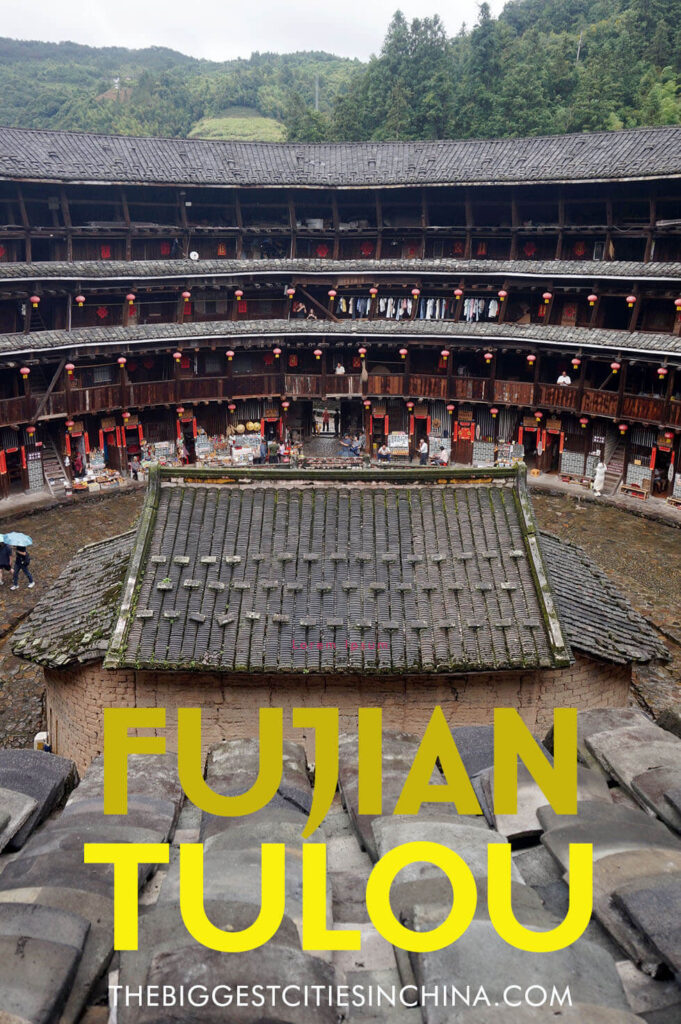
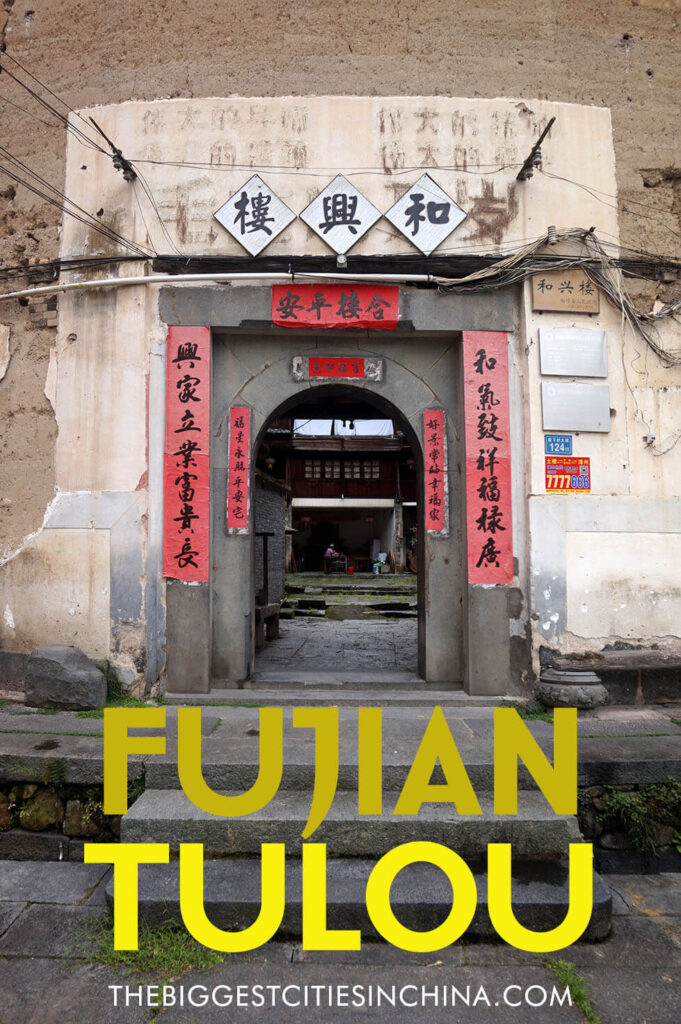
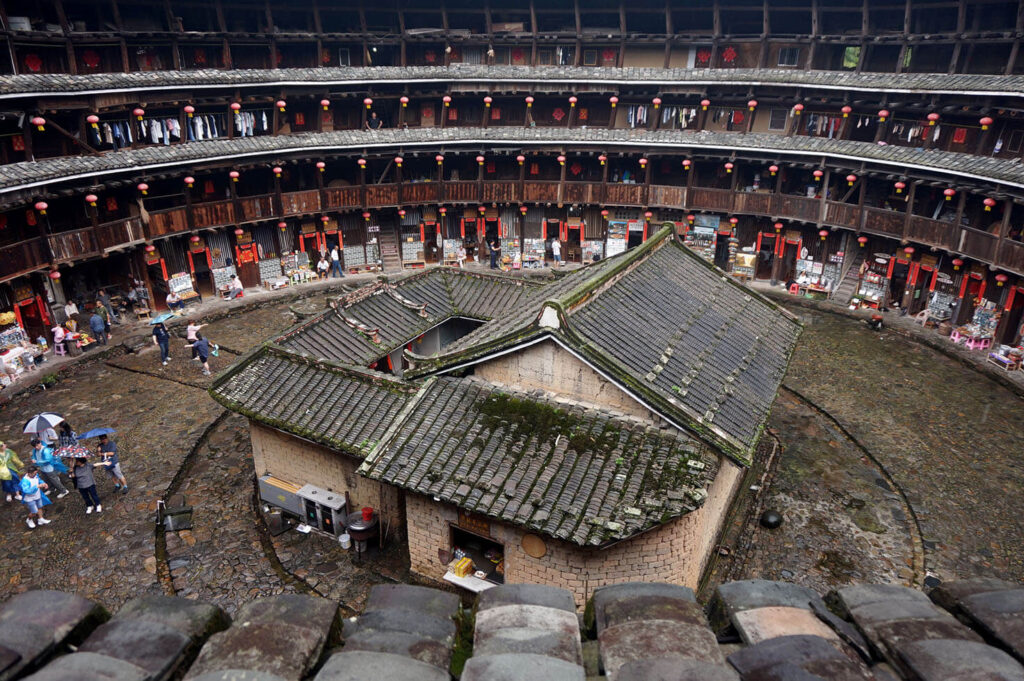
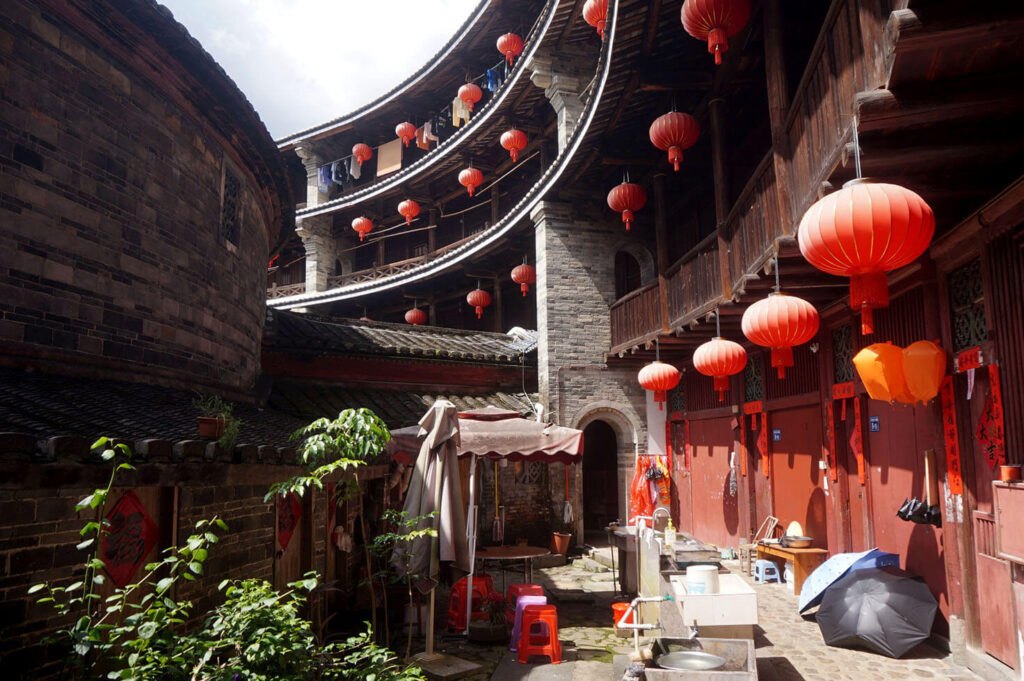
Fujian Tulou are circular, square, or oval structures surrounding a large courtyard. On the outside, they have a very simple appearance, with only one entrance and no windows on the lower floors. On the inside, they are richly decorated, with galleries on the upper floors.
These buildings are made of earthen materials like rammed earth, clay, and stone, which are connected with bamboo strips, sticky rice, and sugar. The name Tulou actually means earthen house. Walls can be as thick as 3 meters (10 feet) at their base and 1.5 meters (5 feet) at the top.
Tulou vary in shape and size. The tallest ones have up to 5 floors. The first floor (ground floor) is where the kitchens and dining rooms are. Granaries and food storage areas are on the second floor, while private spaces are on the third, fourth, and fifth floors. The central courtyard hosts ancestral halls, schools, and washing spaces.
How to Visit
Understand the Area
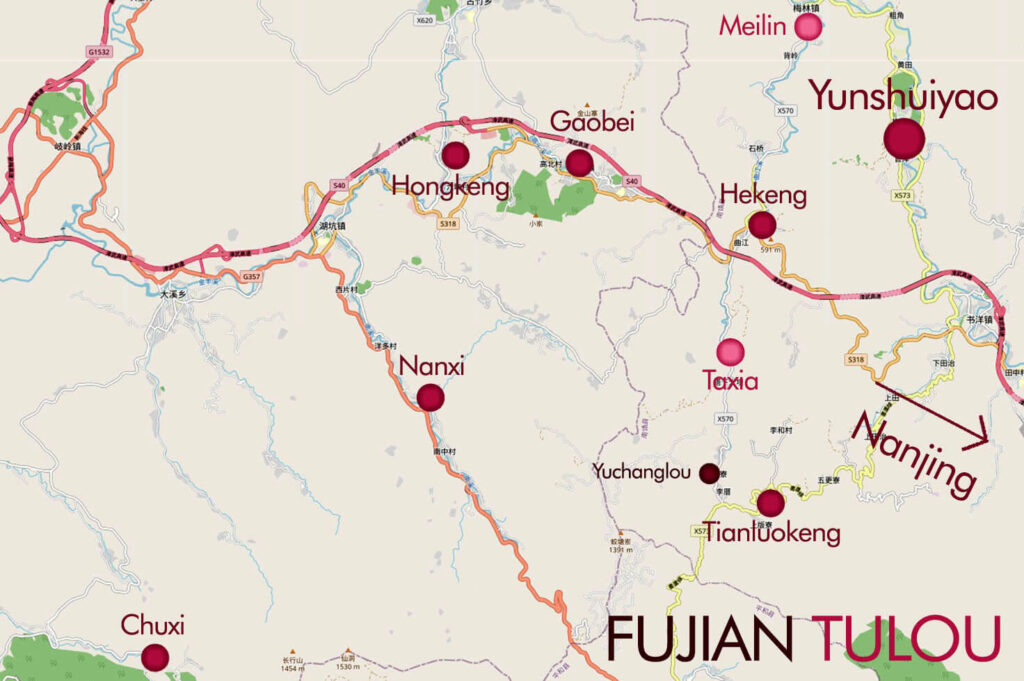
The biggest number of Fujian Tulou are in Nanjing County and Yongding District. There are also some clusters in Hua’an County. In Nanjing County, three places require an entrance ticket: Yunshuiyao, Tianluokeng, and Hekeng. Yongding District charges admission to Gaobei, Honkeng, Nanxi, and Chuxi. These are the most interesting villages.
Depending on how many days you have, you should decide on your route. We spent four days in the area, which was enough to visit all 7 places. However, we like to travel slowly, and we also love to explore nature. Thus, we visited only 5 of these places.
Another reason why we excluded Nanxi and Chuxi is because they are a bit further away, and after a while, many Tulou start to look alike. In this text, we’ll try to help you tailor your perfect route. If you have any questions, don’t hesitate to contact us.
Arrive by Fast Train
The easiest and most comfortable way of arriving in the area is by fast train. You can book your train tickets on the Chinese Railways app (which doesn’t work well), or through Trip.com.
The closest station to the Fujian Tulou villages is Nanjing Station in Zhangzhou. Make sure to choose the right one, as we are not talking about the Chinese megacity and former capital, Nanjing. Nanjing Station is 60 km away from Yunshuiyao, the gateway to Fujian Tulou.
There are direct trains from many Chinese cities to Nanjing Station. Xiamen is the most common option, with frequent trains connecting the two places in just over 30 minutes. Quanzhou and Fuzhou are a bit further away, at 60 and 120 minutes respectively.

Hire a Local Driver
Once you arrive at Nanjing Train Station, you need to transfer to a local bus, shared van, or taxi. Buses are cheap but infrequent and without a clear schedule. Taking a shared van is another option, but it’s difficult to organize unless you speak Chinese.
We opted for the safest option by hiring a private car with a driver. Didi is the most popular ride-hailing app in China, so we found our driver there. The whole ride from the station to Taxia Village (where we stayed) cost us around 200 RMB (around 25 euros / 30 dollars).
We really liked our driver, so we decided to hire him to visit 5 different villages. Our hotel in Taxia also offered a local driver, and their price per hour was quite similar. We paid 150 RMB for a 2-hour trip and 300 RMB for a 4-hour trip. He also took us back to the train station, and this time we paid 150 RMB. Make sure to have WeChat so you can talk to your driver, hotel, etc.
Stay in the Middle of the Area
We are obsessed with nice hotels, so we spent hours looking for the best places to stay near Fujian Tulou. While the majority of accommodation is in Yunshuiyao, we opted for Taxia Village for two reasons. It is way more authentic, and the best hotel in the area is right there.
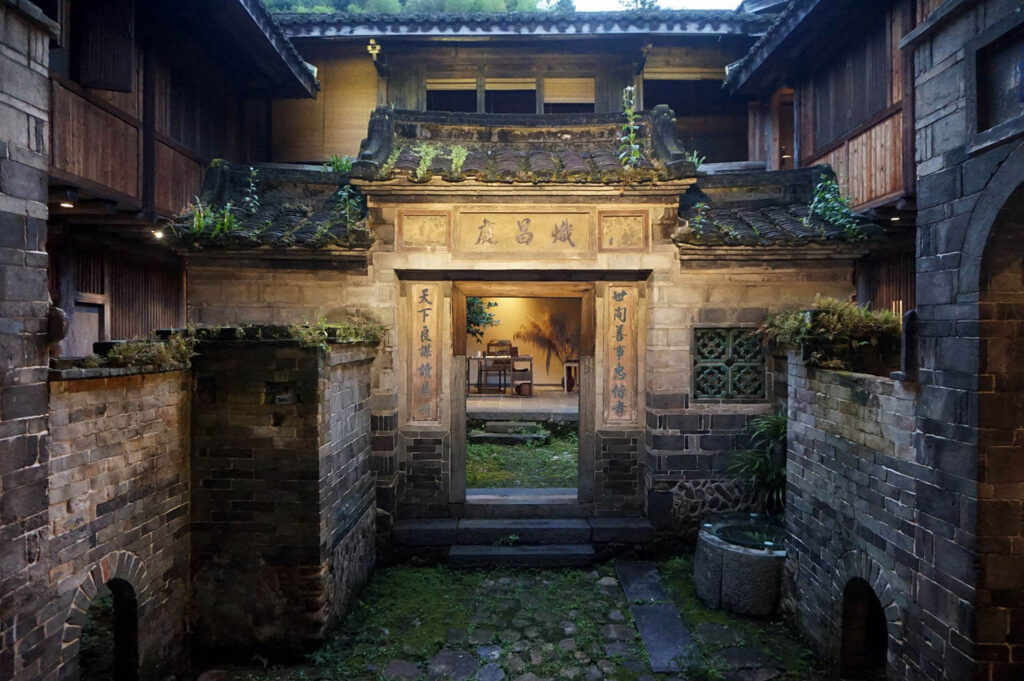
The Tsingpu Nanjing Tulou Retreat was one of the best hotels we’ve ever stayed at. It’s a century-old Tulou converted into a luxury hotel. We stayed in the historical part, and our room overlooked an old ancestral hall. The hosts were extremely nice, the hotel grounds were stunningly beautiful, and the abundant and healthy breakfast was made from local ingredients.
We wanted to stay in a round Tulou as well, and we discovered two options. We chose the Fuqian Building 1906 Tulou Homestay over Yunshuiyao Shuiyunju Centennial Tulou Humanities Homestay because of its location directly in Yunshuiyao. It felt special to be in an original round Tulou; however, the place was noisy and relatively modest.
Which Villages to Visit
Yunshuiyao
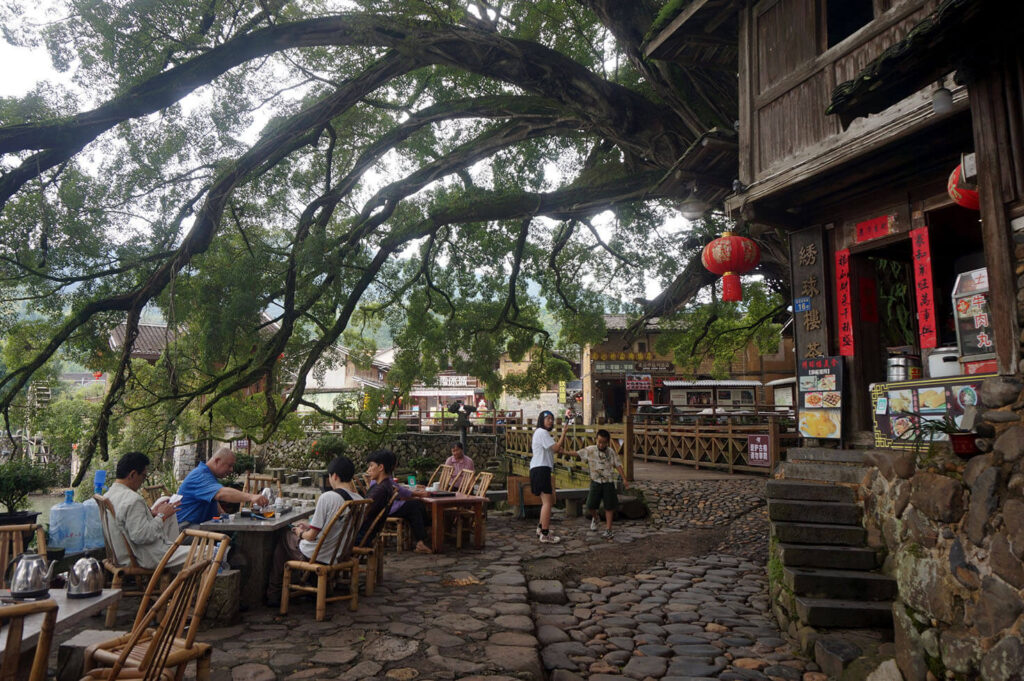
This is by far the most popular village with Fujian Tulou. Originally known as Changjiao, it changed its name after the popular movie The Knot (Yun Shui Yao in Chinese) was filmed here in 2006. Due to its size, it could easily be classified as a town.
Yunshuiyao contains two famous Fujian Tulou. Hegui Building, southwest of the center, is an impressive five-story square Tulou. Huaiyuan Building is a double circular Tulou at the town’s northeastern end.
Yunshuiyao is not an especially beautiful town, but there are plenty of shopping and dining options. One thing we loved about it is the walk along the river between the two famous Tulou. There are also nice walks along the town’s canals.
Tianluokeng
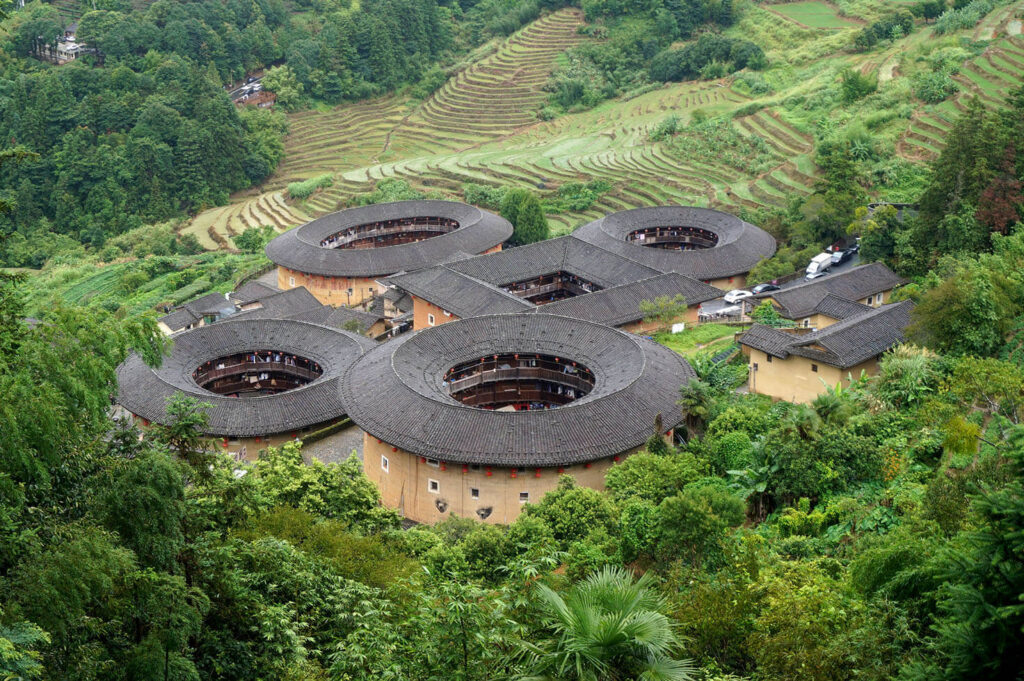
This village hosts the most iconic Fujian Tulou cluster in China. Thus, it can become very crowded. We were lucky to visit during the rainy season, so there were not too many tourists around.
If you did some research on Fujian Tulou, you’ve probably seen photos of Tianluokeng. It’s a group of five Tulou: a square one in the center and four round ones on each side. You can easily observe them from a higher and lower viewing point (ask your driver to take you to both).
We spent some time walking around the village and entering each of the 5 Tulou. The village is somewhere between authentic and touristic. If you only plan to visit a few villages, make sure to go to this one.
Hekeng
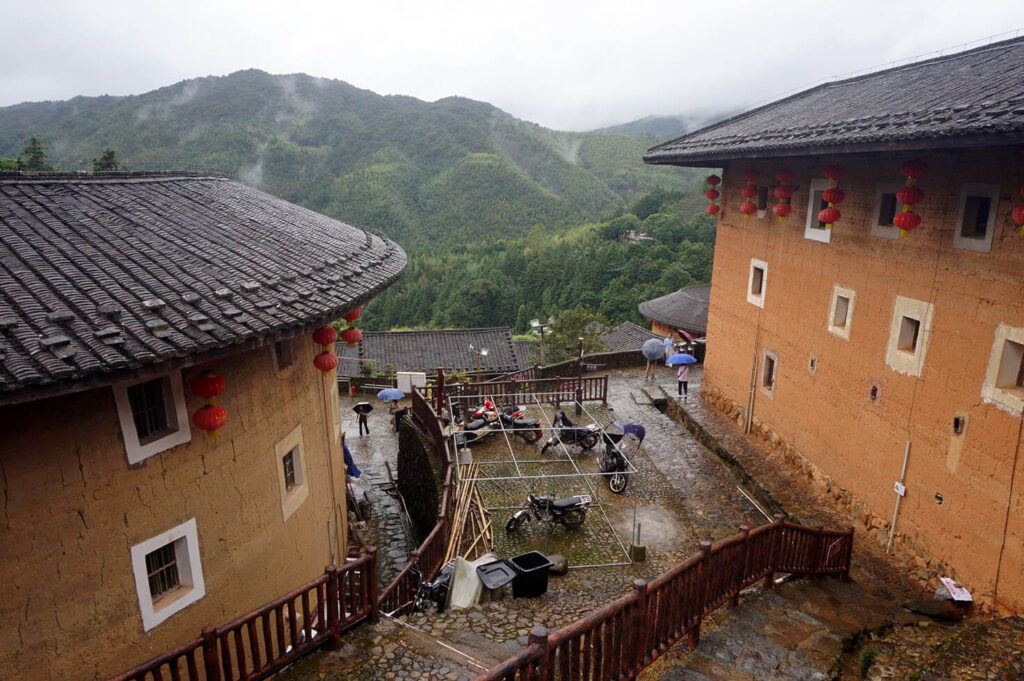
Hekeng was our biggest surprise. It was the village we loved the most, and the one that completely conquered our hearts. We didn’t expect to see so few tourists, as it’s located between Yunshuiyao, Tianluokeng, and the villages of Yongding District.
We loved this village from beginning to end. There was almost no tourist infrastructure, with only a couple of shops selling drinks and snacks. During our 2-hour visit, we encountered 5–6 tourists.
Every Tulou in this village is still in use. Locals live here, and none of the Tulou have been converted into a tourist attraction. In one, we saw numerous geese and ducks; in another one, there was a puppy happily jumping to greet us. If you plan to visit just one village, go to Hekeng.
Gaobei
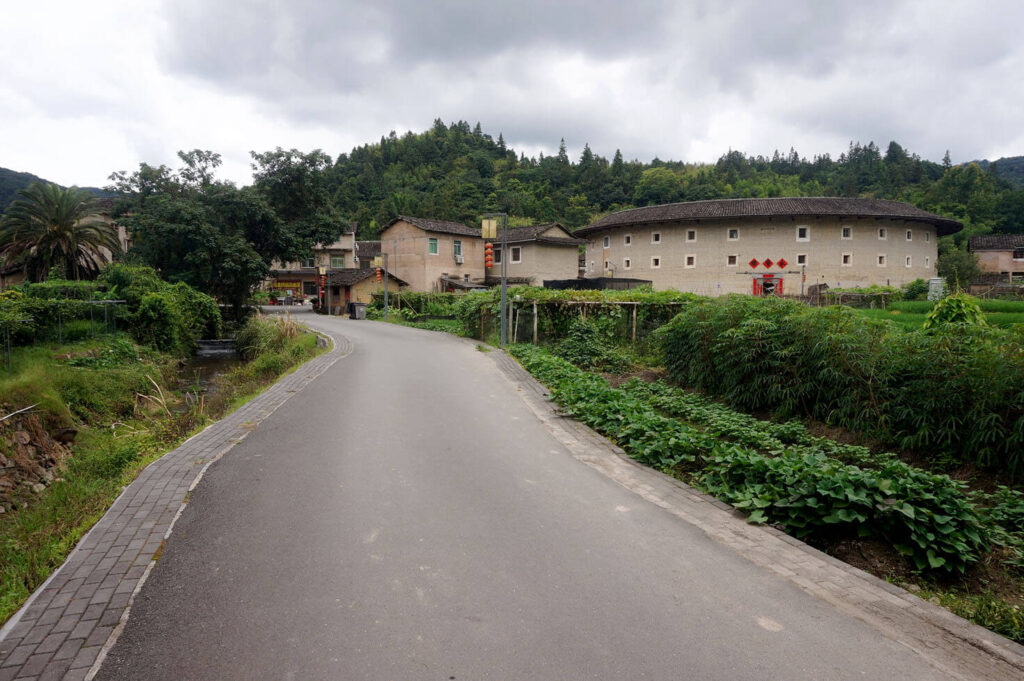
Gaobei is another tourist village where the government has built a lot of infrastructure. There are numerous shops and restaurants and plenty of loud tourists.
Gaobei is famous for its massive Chengqilou, also known as the King of Tulou. Apart from being the largest tulou, what’s special about it is that it contains four concentric rings inside the courtyard. Thus, it feels like a small town inside a fortress.
Though we were impressed by Chengqilou, we didn’t particularly like Gaobei. It was full of tourists, and there was too much infrastructure. We did manage to escape to the part of the village that was untouched, and that was a nice surprise.
Hongkeng
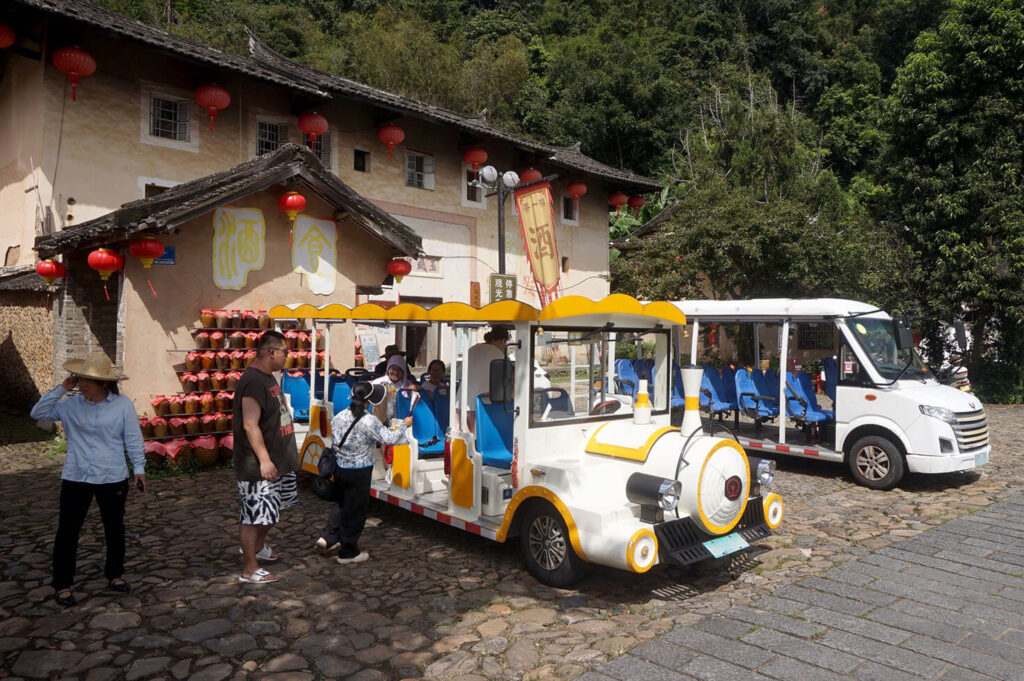
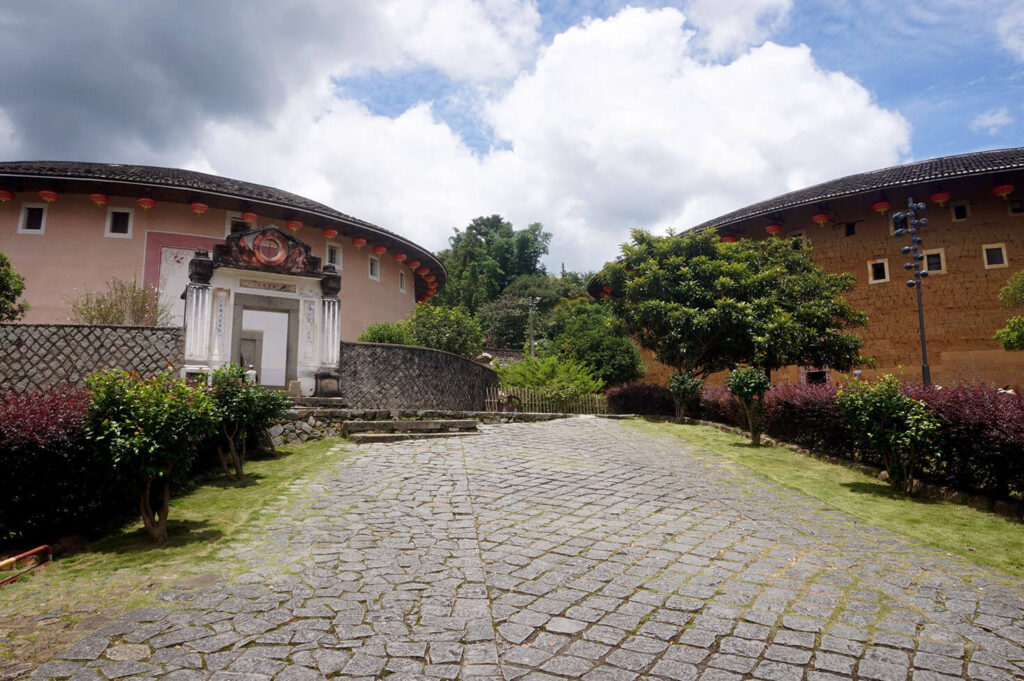
Hongkeng is probably our least favorite place on this list. We bought the combined ticket for King and Prince Tulou, so we had to come here. The village is so massively developed that there are even shuttle buses connecting the entrance to the main Tulou.
Hongkeng’s attraction number 1 is the large Zhencheng Building, also known as the Prince of Tulou. It’s a beautiful double-ring Tulou with a very impressive ancestral hall. The nearby Tulou are also worth visiting.
To make things even worse, they are developing large areas in this village. So soon, it might be like a giant attraction park, with historical structures becoming secondary. If you don’t have too much time, skip it altogether.
Other Places
We were originally planning to visit Nanxi and Chuxi villages as well. However, after spending time in Gaobei and Honkeng, we decided we had had enough of Tulou. We spent one day chatting with the locals in our Taxia village and walking in the nearby woods.
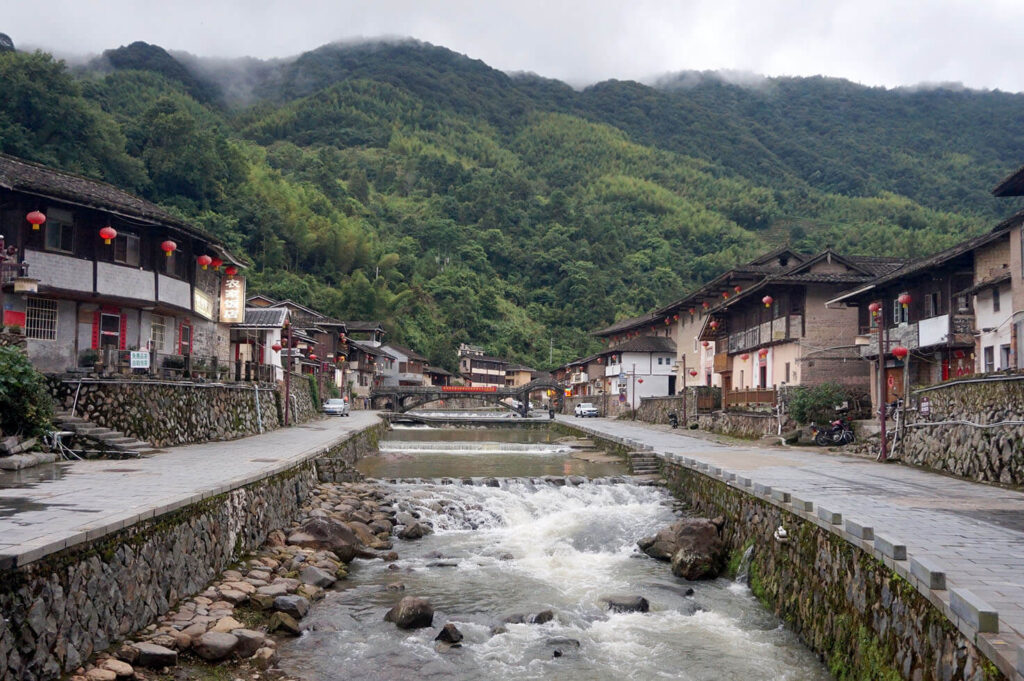
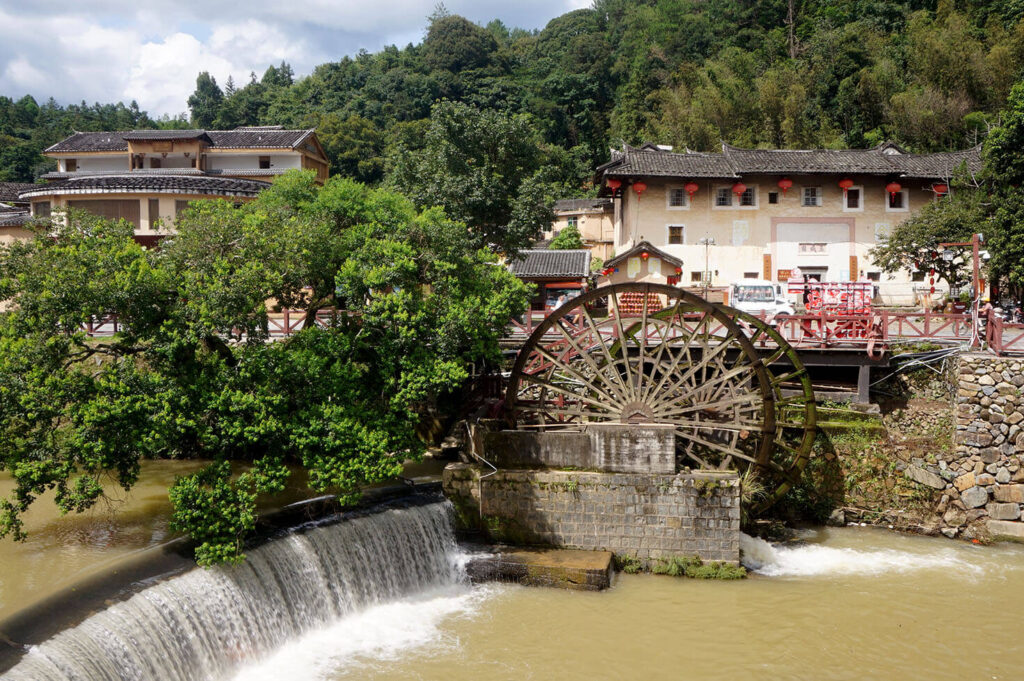
Taxia is a beautiful ancient village that contains several historic Tulou. There are restaurants and shops along the river, and a short walk takes you to a small suburb with more Tulou (that’s where we stayed).
On the day we moved to Yunshuiyao, we had some free time, so our lovely driver recommended taking us to nearby Meilin Town. It’s another cute town with Tulou and a river in the middle. If you have some extra time, it’s worth making a short stop here.