The first time we visited China, we decided to skip Chongqing. We were in Chengdu, and although Chongqing was just a short trip away, it seemed gray and its architecture unappealing. Since then, things have changed dramatically.
Over the past decade, numerous fascinating projects have been built. Thanks to them, Chongqing has become one of the world’s most unique cities and an increasingly popular tourist destination.
There is a bizarre shopping mall, an unusual square, a metro station inside a residential building, striking contemporary architecture, plenty of fake old towns, and even a cool art district. Add to that an impressive natural setting, and you’ll have to include Chongqing to your must-visit list.
Slum-Inspired Shopping Mall
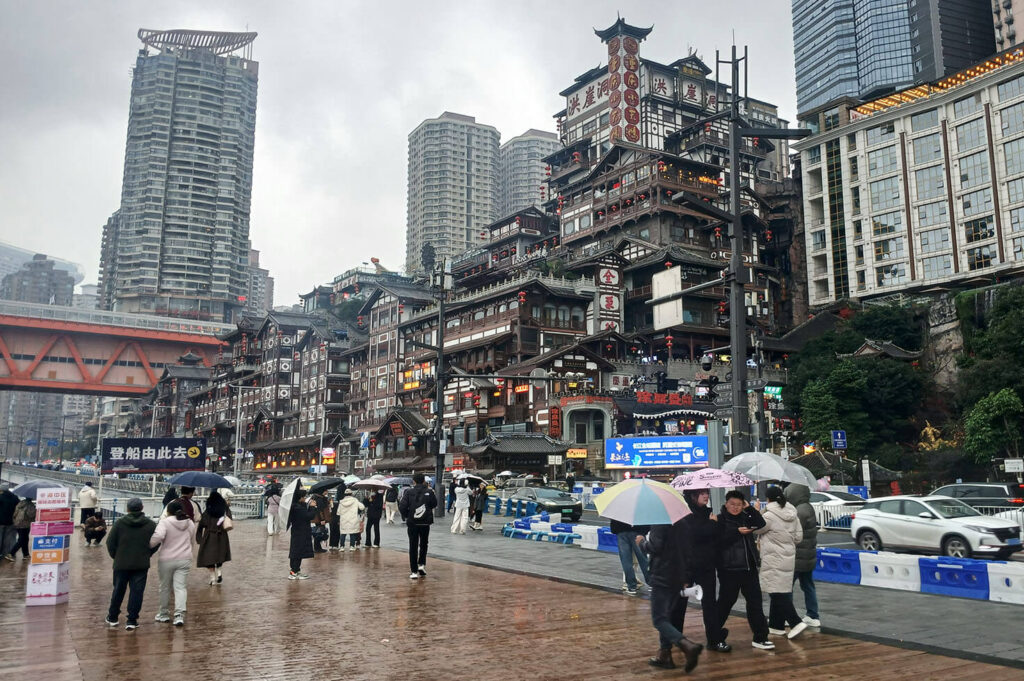
Chongqing’s most popular attraction is the iconic Hongya Cave. Perched on a cliff overlooking the Jialing River, it was inspired by the former slum that stood here before being demolished in 2005.
It is an 11-story mixed-use stilt building. Most of the complex is occupied by shops, restaurants, and hotels. Although we found it highly photogenic, especially at night, we didn’t particularly enjoy being inside. It was overcrowded at virtually every hour of the day.
Our advice is to admire this place from a distance. Several nearby viewpoints offer excellent photo spots for capturing the structure. One of the best is on a cliff northwest of the Chongqing Art Gallery.
Square on a Rooftop
Another structure that has gone viral in recent years is the famous Kuixinglou and its open-air Datang Plaza. This place is the complete opposite of Hongya Cave. It doesn’t look that impressive from afar; instead, you have to visit it to understand why it is so unique.
Because of Chongqing’s rugged terrain, many buildings have been carved directly into the rocks. Kuixinglou is one of them. Its southern side appears to be only two stories tall, with a square on top. However, when you cross the plaza, you suddenly arrive at its northern side, which sits atop a 22-story building.
Two suspended metal bridges connect the square with an office building to the north. The best views of this extraordinary structure are from those bridges. You may need to wait patiently for the perfect photo opportunity, though.

Metro Station in a Residential Building
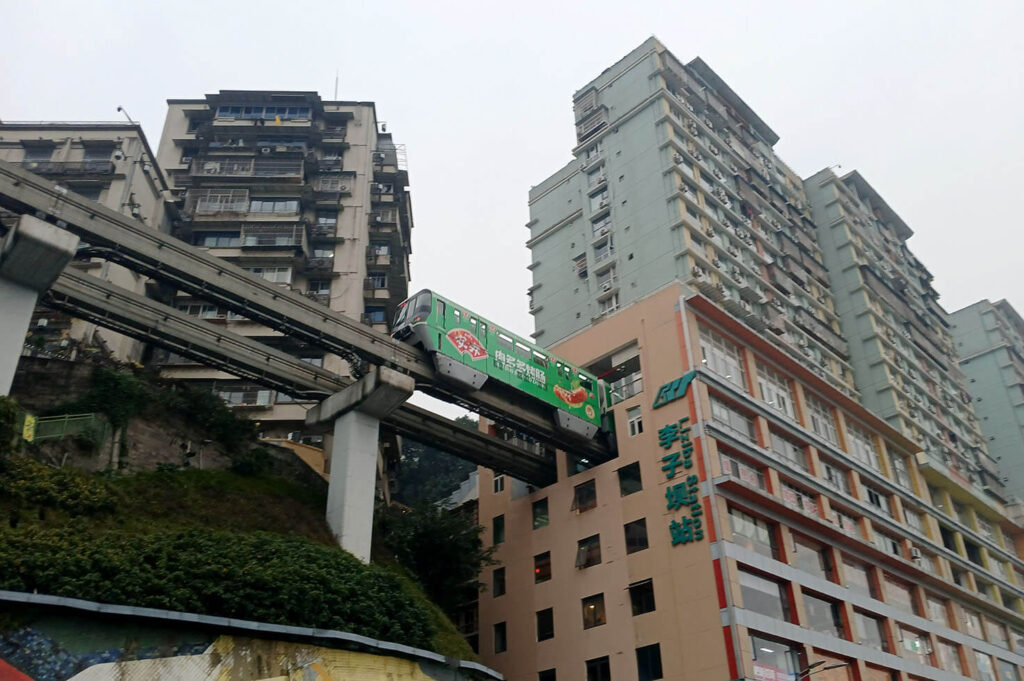
The third building that brought Chongqing into the international spotlight is Liziba Station on Chongqing’s metro Line 2. This was the city’s first metro line, opened in 2005.
What makes the station so unusual is that it is integrated into a 19-story residential building. In fact, the station occupies the space between the 6th and 8th floors.
The highlight here is watching the trains pass directly through the building. The Liziba Viewing Platform by the river is often packed with tourists, so once again, it’s not necessarily the most relaxing experience.
Futuristic Fortress
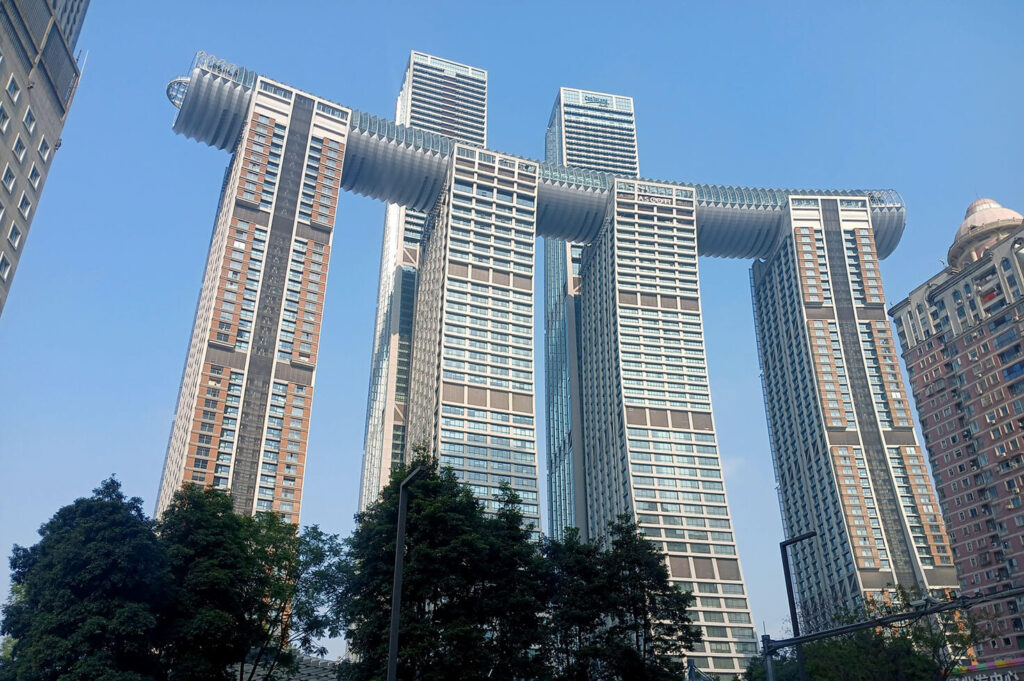
In Chongqing, it often feels as though everything was designed to impress. That is certainly the case with Raffles City Chongqing. Completed in 2019 and designed by renowned architect Moshe Safdie, it quickly became one of the city’s defining landmarks.
Raffles City is a complex of eight towers located at the confluence of the Yangtze and Jialing Rivers. Its most distinctive feature is the horizontal skyscraper connecting four of the towers, known as the Crystal. The views from there are spectacular.
We found the building somewhat too massive and heavy. It was modeled after Marina Bay Sands in Singapore, but here everything feels even more exaggerated. Supposedly, the design represents traditional Chinese ships, though to us it looked more like the Titanic, with Kate Winslet and Leonardo DiCaprio standing at the bow.
Double Twin Towers
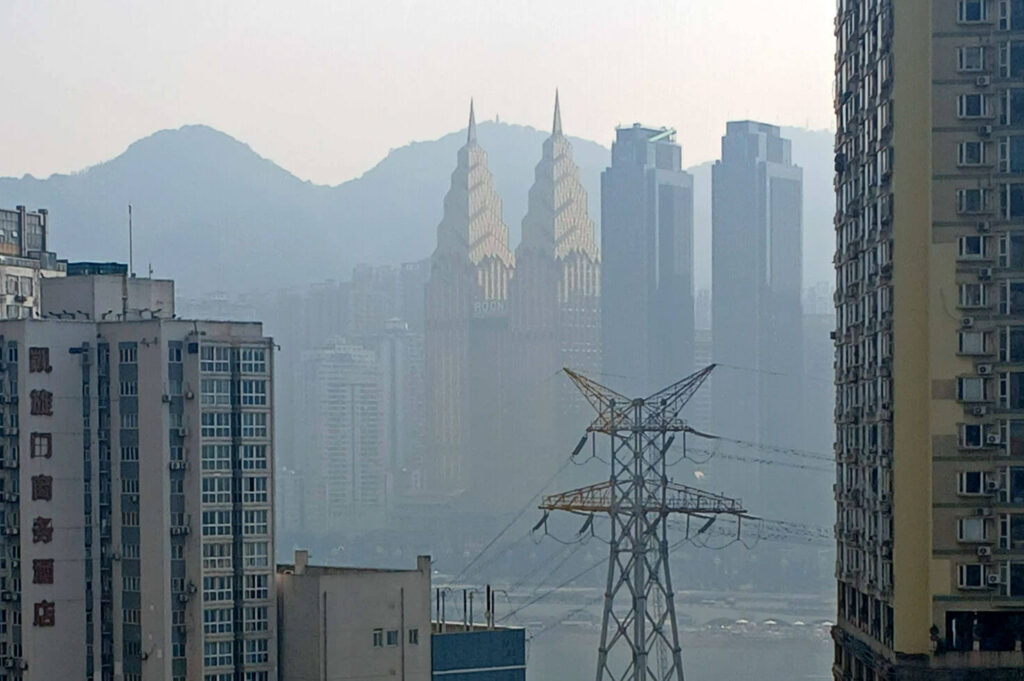
Whatever architectural marvel you can imagine, Chongqing seems to have it. In fact, the city has not one but two sets of twin towers, standing side by side along the mighty Yangtze River.
The golden Art Deco-inspired complex is the International Finance Center Chongqing, home to a Sheraton Chongqing Hotel. The sleek black towers nearby are known as Huangguan International and house an Atour Hotel.
You can photograph both sets of towers from the Nanbin Road Scenic Area nearby. Another excellent viewpoint is a small terrace near the intersection of Ciqi Street and Xinhua Road in downtown Chongqing.
Theater That Looks Like a Ship
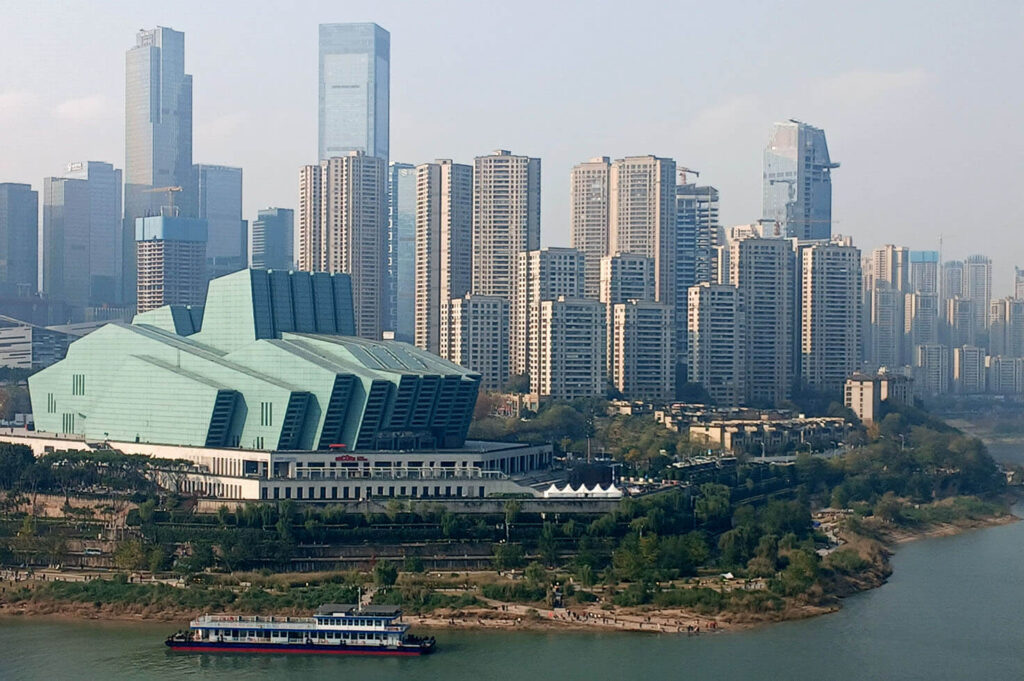
Apart from the kitsch and camp, Chongqing is also home to some genuinely impressive contemporary architecture. The Chongqing Grand Theatre opened in 2009 and is now one of the city’s most loved buildings.
Located at the confluence of the Yangtze and Jialing Rivers, directly opposite Raffles City, the building resembles a giant ship. It was designed by Gmp Architekten from Germany.
The complex contains several large auditoriums hosting opera, ballet, and musical performances. It is beautifully illuminated at night and is best admired from Raffles City, both from the ground level and from the Crystal skybridge.
Building with Chopsticks
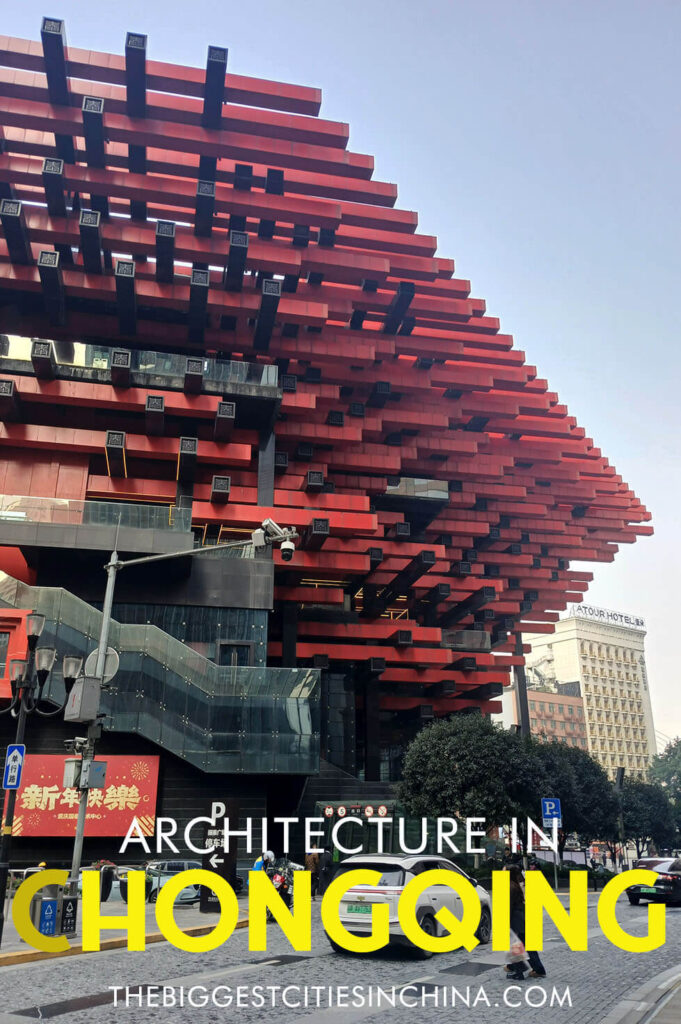
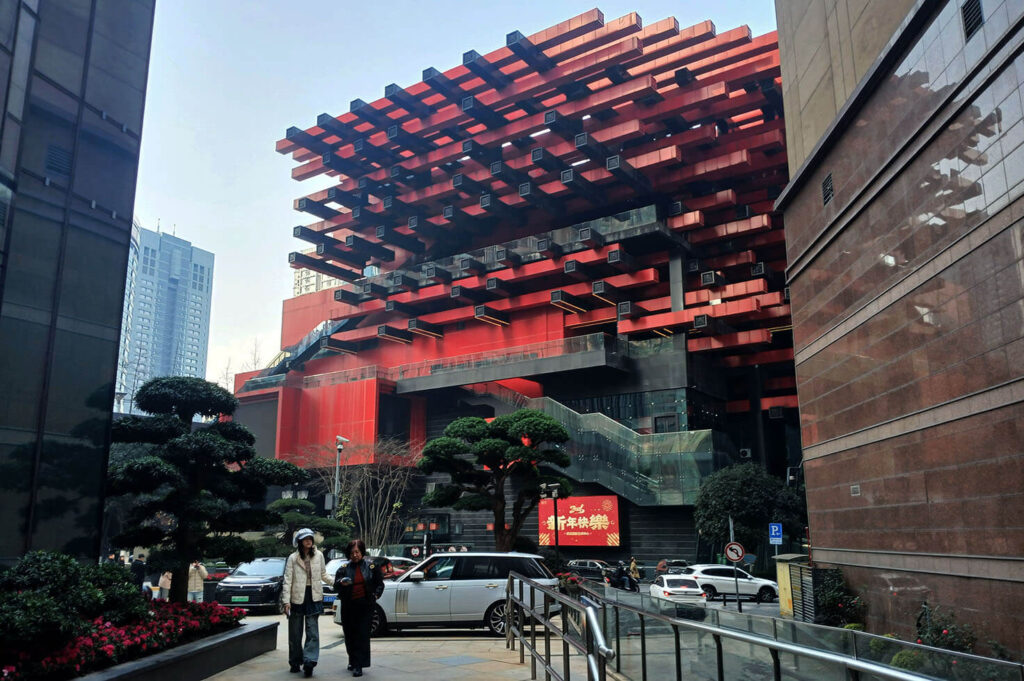
This is our favorite building in Chongqing. The Chongqing Art Gallery opened in 2013, designed by the China Architecture Design & Research Group. You’ll find it in the city center at the beginning of Jiefangbei Pedestrian Street.
Its most recognizable feature is the network of interwoven red and black beams, said to have been inspired by chopsticks. Chongqing is famous for its hot pot, and what better way to enjoy it than with a pair of chopsticks?
The museum hosts Chinese paintings and sculptures. We entered the building, though only the lobby and a small gallery were open at the time. We strongly recommend walking around the entire building, as its shape changes dramatically depending on the angle.
Diamond That Shines at Night
The best way to experience Chongqing is after dark. Many of its buildings are illuminated in vibrant colors, giving the entire city a surreal, sparkling atmosphere.
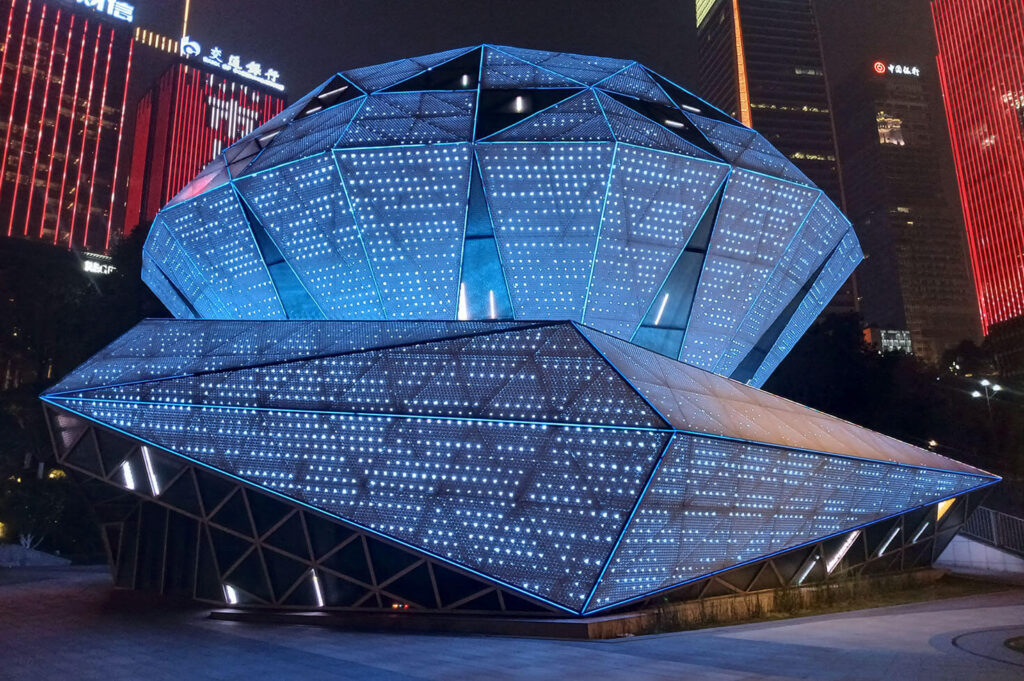
One structure in particular is especially photogenic at night: Zuanshi Plaza (Diamond Square). It forms part of the enormous Chongqing Financial Convention and Exhibition Center. The large development, nicknamed as the ‘Manhattan of Chongqing’, has completely transformed the skyline north of the Jialing River.
We strongly recommend visiting this area after sunset. Not only does the ‘diamond’ glow beautifully in blue light, but the area also offers some of the best views of downtown Chongqing without the crowds. It’s one of the city’s best spots for photographing Hongya Cave.
Fake Old Neighborhoods
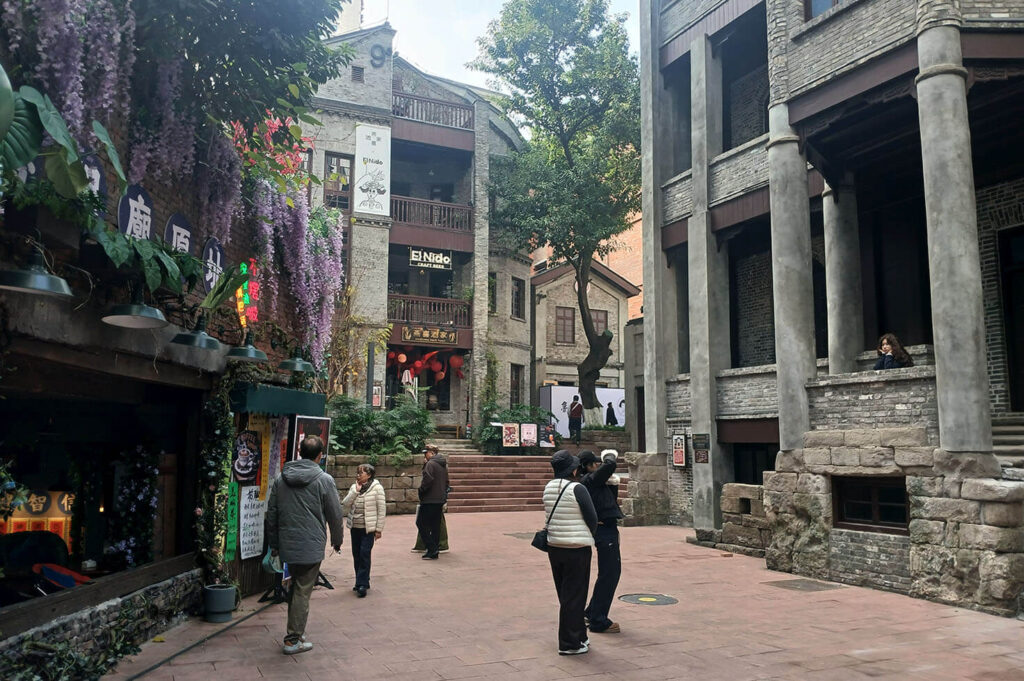
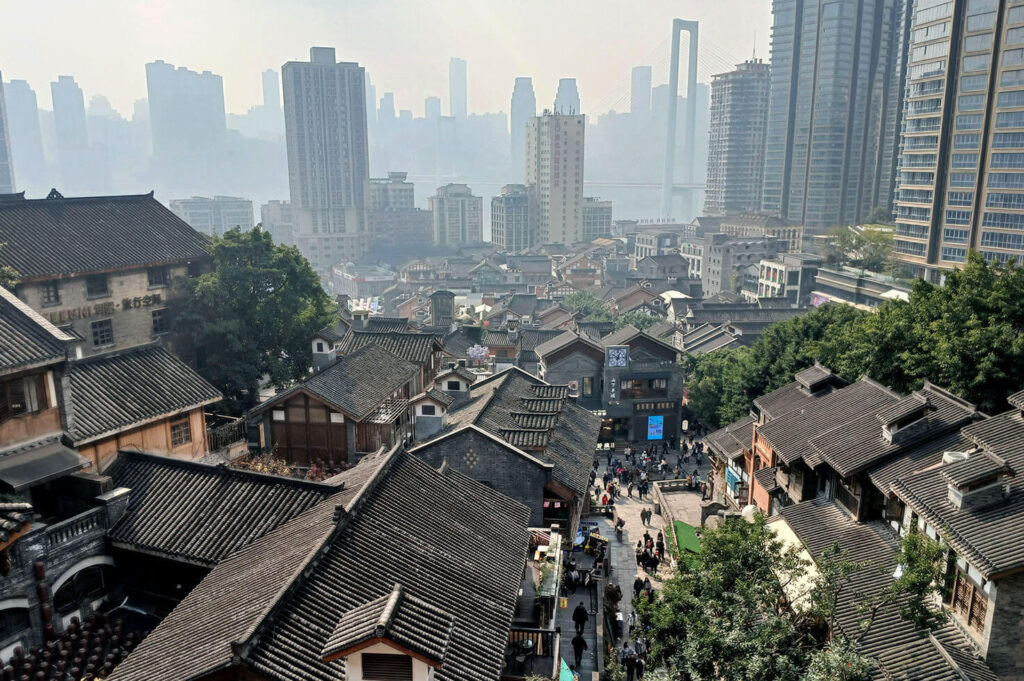
Not everything in Chongqing is new. The city does contain some genuinely historic architecture, including the charming Ciqikou Ancient Town. However, if you come across a neighborhood with ‘Old Street’ in its name, chances are it is not actually old at all.
The most famous of these reconstructed ‘ancient’ neighborhoods is Shibati in downtown Chongqing. The area functions as an extension of Jiefangbei Pedestrian Street and is packed with shops and restaurants.
The Ciqikou Folk Culture Village next to Ciqikou Ancient Town feels more like a giant shopping mall than a historic district. We would instead recommend visiting Danzishi Laojie, Xiahaoli Old Street, or Longmenhao Old Street for their breathtaking views.
Cool Art Zone
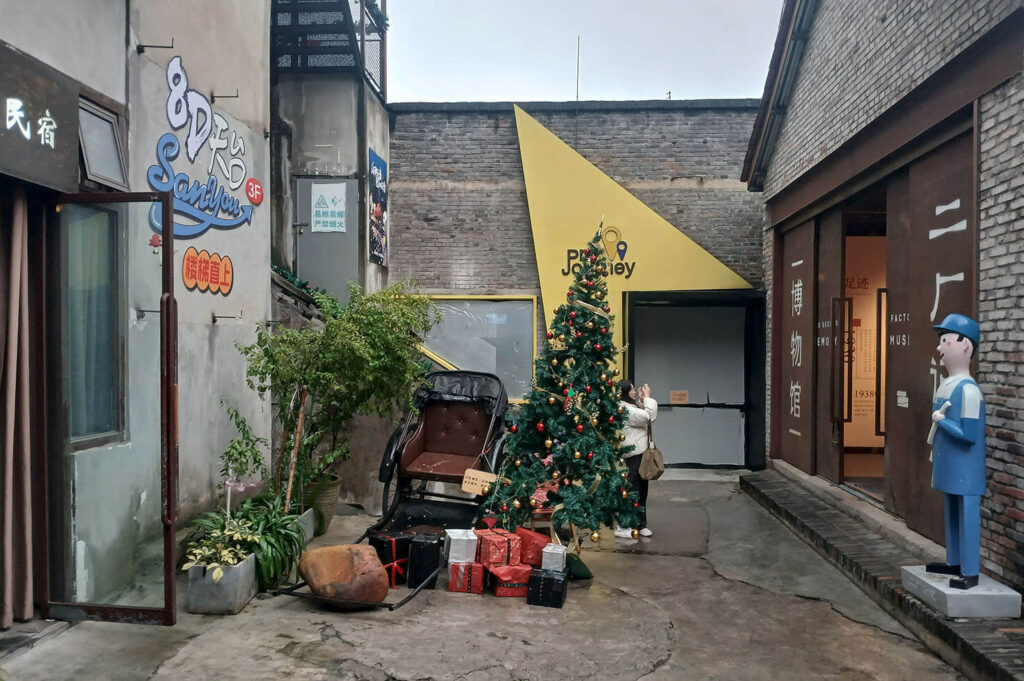
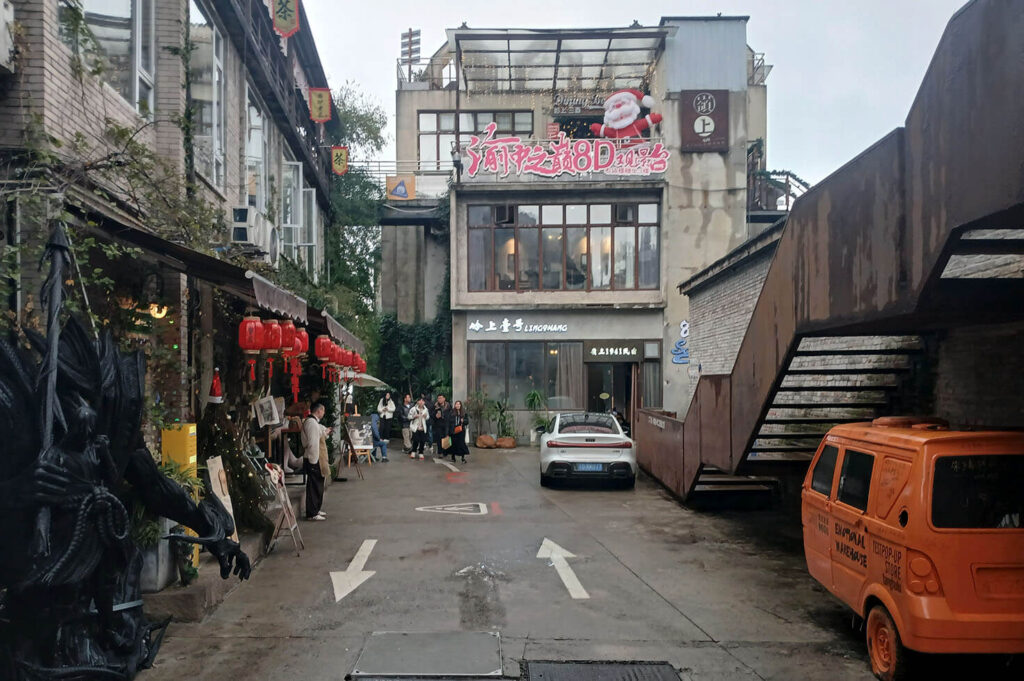
Beijing has the 798 Art Zone, Shanghai has M50 Creative Park, and Chongqing has Testbed 2, also known as Erchang Culture and Creative Park. This charming art district is located on the peninsula near Eling Park.
The complex occupies a former printing factory that operated here until 2012. Today, it hosts a variety of businesses, from clothing and jewelry shops to cafés, restaurants, and art galleries.
What we loved the most about this place is how subtly its architecture reflects the city, but with a more artistic twist. It feels modest yet stylish, which stands in sharp contrast to the over-the-top spectacle of many other places on this list.
Where to Stay in Chongqing
The best area to stay in Chongqing is the city center on the peninsula in Yuzhong District. We stayed at the fabulous Hilton Chongqing, which served as an excellent base for exploring the city.
If you prefer staying right in the heart of downtown, I recommend the Westin Chongqing Liberation Square. Located just off the main pedestrian street, it is one of the city’s finest hotels.
Another great option is the Chongqing Empark Grand Hotel in Jiangbei District, across the Jialing River. The hotel is next to the lively Guanyinqiao Street, and its spacious rooms include comfortable seating areas.